
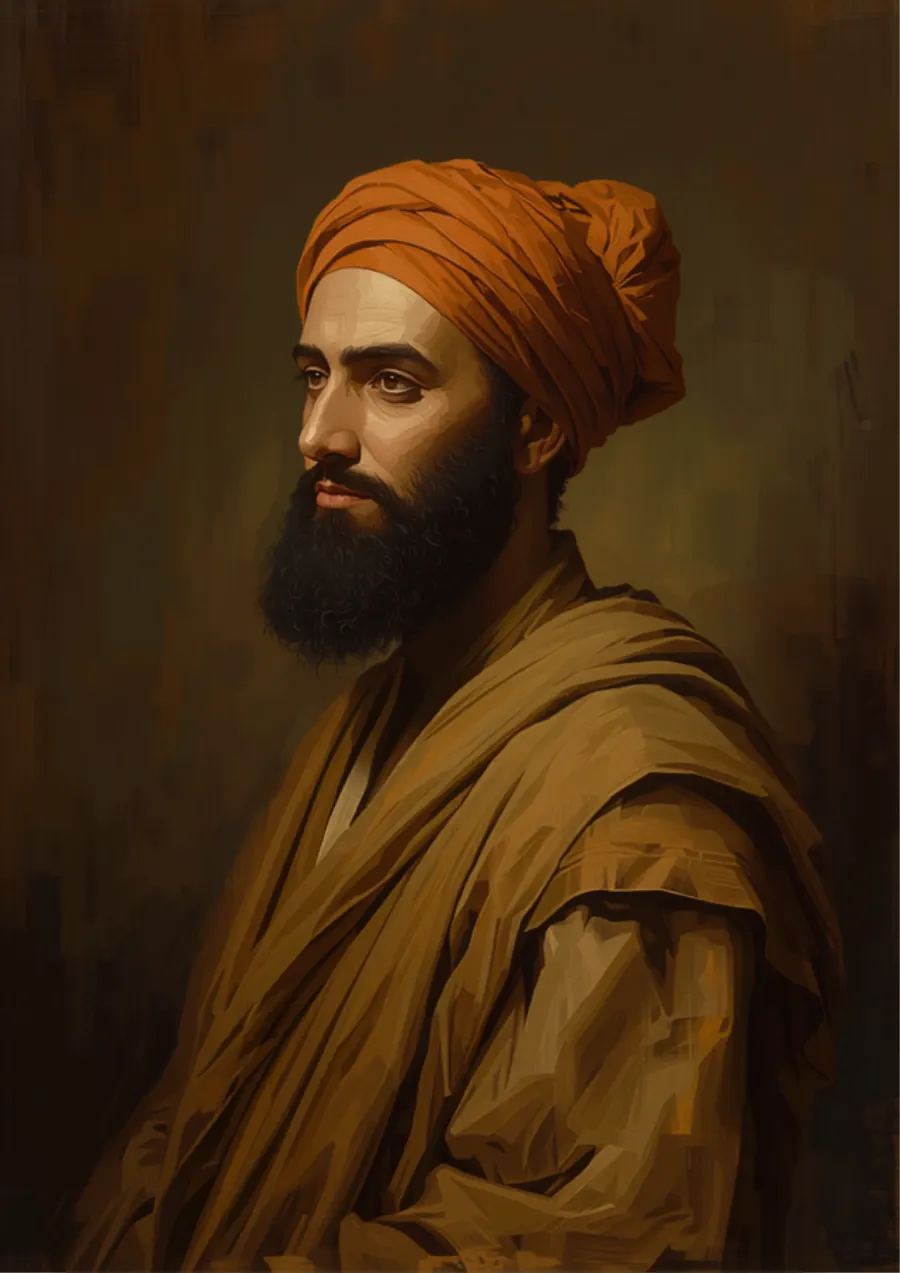
Saadi
c. 1210 to c. 1291, Shiraz
The garden and the road. Wisdom, gently offered.
About Saadi
Abu-Muhammad Muslih al-Din bin Abdallah Shirazi, known as Saadi, spent decades travelling before returning to Shiraz to write the two books he is remembered for.
The Bustan, finished in 1257, is in verse. The Golestan, finished the year after, alternates prose and poetry and is the book Persian children have learned from for seven centuries. Its lines on the shared body of humankind are inscribed at the United Nations.
Those lines are the Bani Adam, and they say that the children of Adam are limbs of one body, made from one essence, so that when one limb is hurt the others cannot rest. They are quoted far more often than they are attributed, and they were written into a book of practical advice rather than a manifesto.
The two books were built to be different from each other on purpose. The Bustan is how the world should go: generosity, justice, restraint, argued in verse across ten chapters. The Golestan is how it actually goes, told in short anecdotes about kings, beggars, teachers and frauds, each ending in a couplet. Read together they are a moral education that never once pretends people are better than they are.
The travelling came first and it shaped both. By his own account he spent something like thirty years on the road, through Anatolia, Syria, Egypt and the Hijaz, in a century when the Mongol invasions were remaking everything behind him. The stories he tells are told as things witnessed, which is why the Golestan reads more like reportage than instruction.
He is the earliest of the original five in English. Francis Gladwin translated the Golestan in 1806, Edward Rehatsek in 1888, and both are public domain; Emerson read him and wrote a preface for an American edition. Ganjoor holds the Persian, and the app links every verse back to it.
ای نفسِ خرّمِ بادِ صبا
از برِ یار آمدهای، مرحبا!
O joyful breath of the morning wind — you have come from the beloved; welcome!