
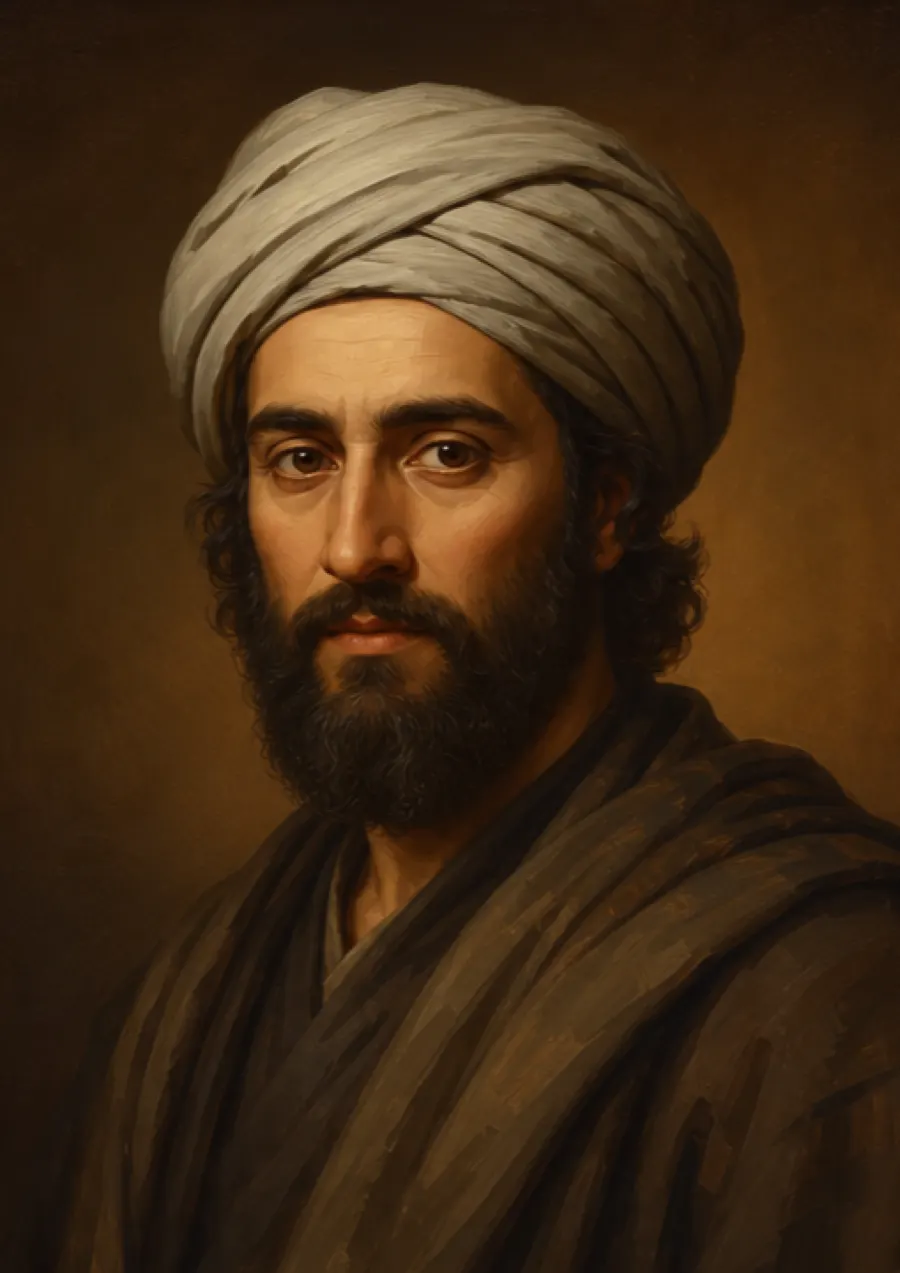
Hafez
c. 1325 to 1390, Shiraz
The tavern of the seeker. Where wine and mirror share the same table.
About Hafez
Khwaja Shams-ud-Din Muhammad Hafez-e Shirazi lived his whole life in Shiraz, in what is now Iran, and left a single book: the Divan, a collection of roughly five hundred ghazals. The name Hafez is a title, given to someone who has memorised the Quran.
The Divan is the book Iranians keep in the house. It is read at Yalda and at Norooz, and it is the book opened at random for a fal, a question put to the page. That practice is old enough that the poems are known by their opening lines rather than by number.
The ghazal he wrote in is a fixed shape rather than a free one. Between five and fifteen couplets, every one of them ending on the same rhyme and often the same repeated word, and the poet naming himself in the last couplet. Hafez signs almost all of his that way, which is why so many end by addressing him directly.
He lived through the reigns of three rulers of Shiraz and the poems register all three. Abu Ishaq Inju kept a court that made room for him. Mubariz al-Din closed the wine houses and enforced a public piety the Divan answers with wine, taverns and a hypocrite preacher who appears often enough to be a character. Shah Shuja reopened the city, and Hafez outlived him.
His tomb sits in a garden in Shiraz called the Hafezieh, in the pavilion built over it in 1935. It is a place people visit rather than a monument they look at: the usual thing to do there is to open the Divan and read a line, which is the same act the app calls a faal.
He reached English slowly and unevenly. Gertrude Bell published Poems from the Divan of Hafiz in 1897 and it remains the version most often quoted; Goethe had already worked from a German rendering for his West-Eastern Divan seventy years earlier. Neither used the numbering that Persian editions use, which is why matching a single couplet to a public domain English line is harder than it sounds, and why the app labels its own translations honestly.
غنچه گو تنگدل از کارِ فروبسته مَباش
کز دَمِ صبح مدد یابی و انفاسِ نسیم
Tell the bud: do not be small-hearted at what remains closed — for from the morning's breath you will find help, and from the breeze's sigh.