
Yalda
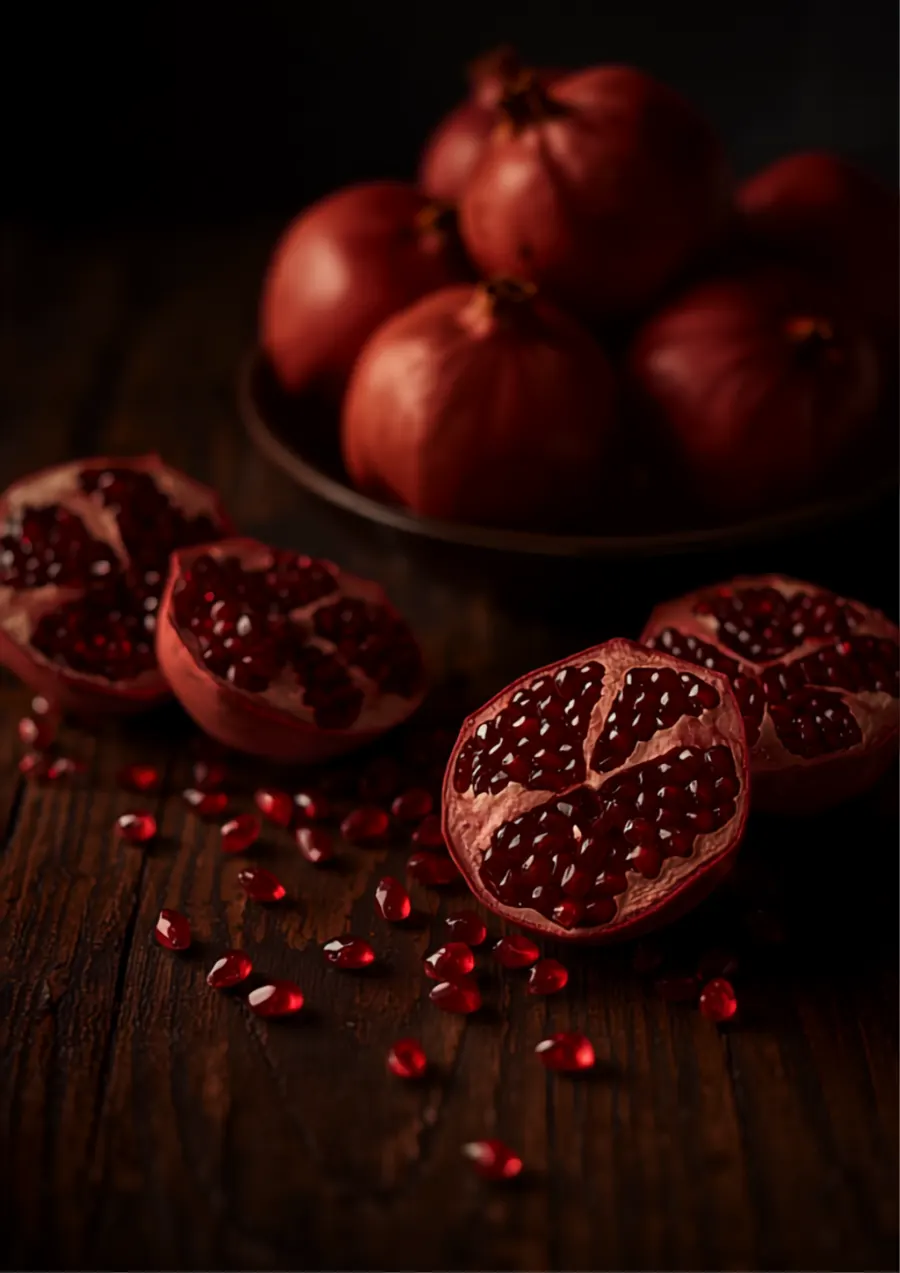
The longest night of the year, when families gather to read Hafez, share pomegranates and watermelon, and welcome the return of the sun.
Yalda, also called Shab-e Chelleh, falls on the northern winter solstice, the night of 21 December in most years and 20 December in some. It is the longest night and the last night of autumn, and the morning after it the days begin to lengthen again.
The name comes from a Syriac word for birth. What is being born is the sun: the night marks the turn of the year toward light rather than the depth of winter, which is why it is kept as a celebration and not a vigil. The tradition predates Islam in Iran and has continued alongside it for well over a thousand years.
The table is red on purpose. Pomegranate and watermelon are the two fruits that must be there, both for the colour, which stands for the dawn, and because a watermelon kept from summer is proof the household planned ahead. Nuts, dried fruit and a candle complete it.
Then the Divan comes out. Someone makes a wish, opens Hafez at random and reads the ghazal aloud, and the family argues about what it means for the person who asked. That is a faal, and Yalda is the night it is done most. Families who keep no other tradition often still keep this one.
It is observed wherever the diaspora is, and the date does not move with the hemisphere: Iranians in Australia keep Yalda in December, on the longest night in Tehran rather than the longest night where they live. Hamdam marks it on the day and offers the faal.
Yalda arrives in 77 days.
Yalda arrives in 442 days.
Yalda arrives in 807 days.
Yalda arrives in 1172 days.
Hamdam keeps the days that matter where you come from, and where you live.