
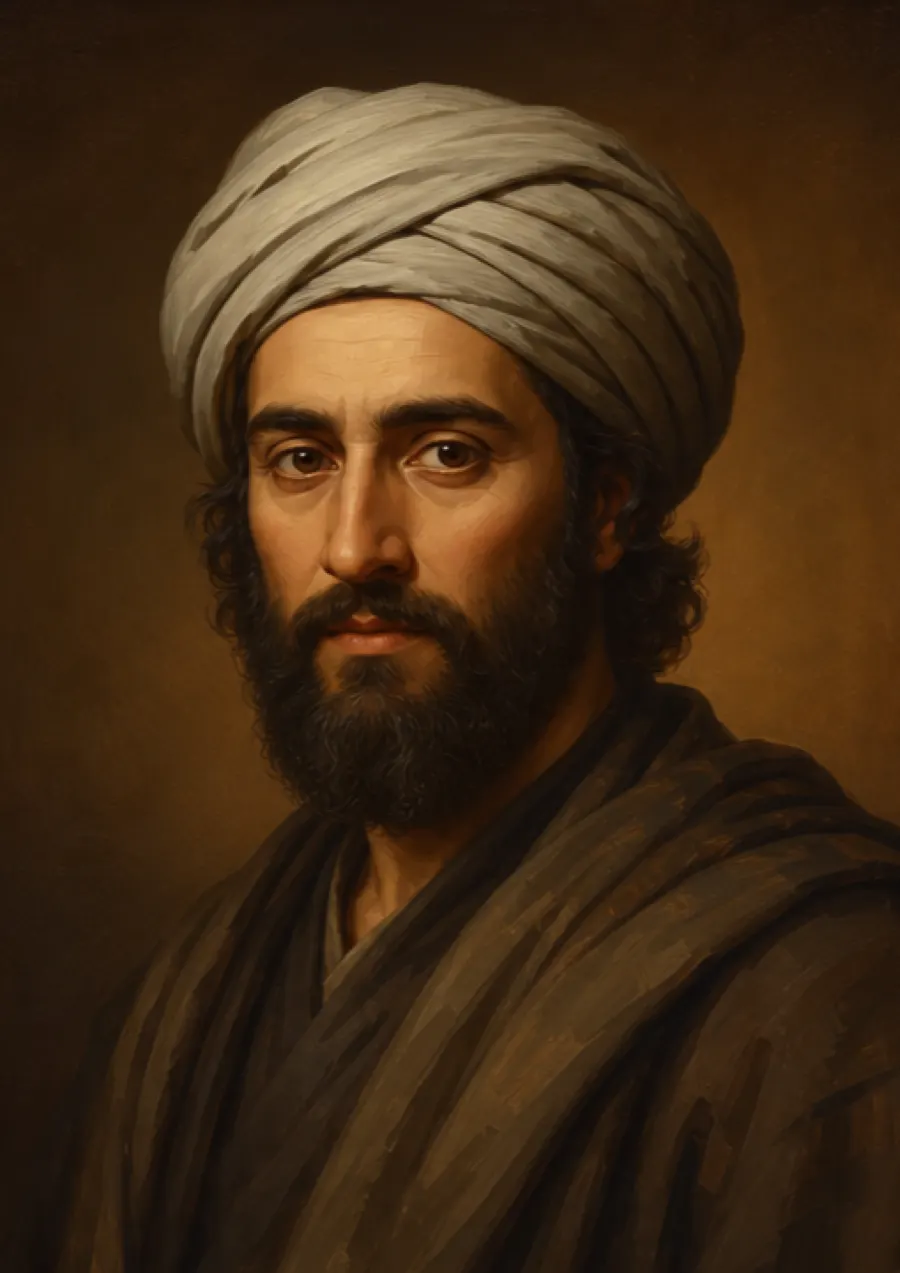
Fal-e Hafez
Ask, as generations have.
What a fal is
A fal is a question put to a book. You hold the question in mind, open the Divan of Hafez at random, and read the ghazal you land on as an answer. The practice is old enough that it has its own name, faal-e Hafez, and its own etiquette: you do not ask twice about the same thing, and you read the whole poem rather than picking the line you wanted.
When a fal is read
It belongs to particular nights. On Yalda, the longest night of the year, the Divan comes out after the pomegranates and someone reads for each person present. It happens again at Norooz. In many houses the book lives somewhere permanent and gets opened whenever a decision is close, which is why Iranians often say they own two books they never bought: the Quran and the Hafez.
How a fal is taken
The steps are the same whether the book is on a table or on a phone. You settle on the question first and hold it without saying it aloud, which is the niyat, the intention. Many people then say a Fatiha for Hafez himself before opening. You open the Divan at random rather than choosing, and you read the ghazal you land on from the beginning, not from the line that catches your eye. Custom says one question at a time, and not the same question twice.
Why the Divan of Hafez
Other books are used the same way, the Shahnameh and the Masnavi among them, but Hafez is the one that stuck. He is called Lisan al-Ghayb, the tongue of the unseen, and Tarjoman al-Asrar, the interpreter of secrets, and both titles were given because of this practice rather than the other way round. It helps that the ghazals do not tell stories. Each one turns on longing, patience, luck or the gap between what is said and what is meant, so almost any of them will meet almost any question halfway.
Reading the answer
A fal is not read as a prediction. The ghazal is taken as a comment on the situation, and the work is in deciding which line is speaking to you and what it is saying, which is why it is usually done aloud and with other people arguing about it. Printed editions often carry a tafsir, a short interpretation, beside each poem; some readers use it and some consider it beside the point. Nobody treats a fal as binding.
Fal-e Hafez in English
It works in English, with one thing worth knowing. The Persian ghazal carries its meaning in ambiguity, in words that hold a worldly and a spiritual sense at once, and a translation has to choose. That is why two English versions of the same poem can read as different answers. Reading the Persian alongside the English, even without reading Persian, at least shows you where the poem is denser than the rendering. The name is transliterated several ways, fal, faal and fa'l among them, and written فال حافظ in Persian.
Fal-e Hafez in Hamdam
Hamdam does the same thing without the paper. Ask, and it opens the Divan at a verse, in the original Persian or in English.
غنچه گو تنگدل از کارِ فروبسته مَباش
کز دَمِ صبح مدد یابی و انفاسِ نسیم
Tell the bud: do not be small-hearted at what remains closed — for from the morning's breath you will find help, and from the breeze's sigh.