
Ask an Elder
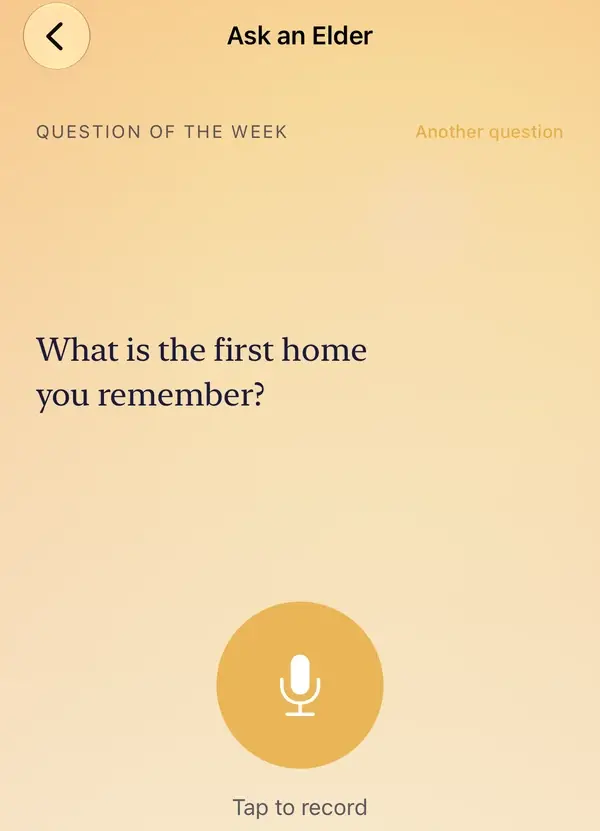
Hand your iPhone or iPad to your grandmother and let her answer in her own voice. Hamdam records it, keeps it, and writes down the words afterwards, on your device.
The audio is the thing being kept, so it is saved first and saved regardless. If the words cannot be made out, or the language is not one the transcriber knows, you still have her voice.
Step by step
Open Roots.
Rootsریشهها
Under your family, find this week's question and tap Record an answer. The Voices tile has Record a voice as well.
Hand it over. Tap the large microphone to start and tap again to stop. The first time, Hamdam asks for the microphone.
Choose who was speaking, or leave it as Later, then tap Keep. Discard throws the recording away.
If the words name people, places or a lesson, you are asked to confirm them. Links to people already in your family are ticked for you; a new person is never added unless you tick it.
If you chose who was speaking, Keep it as a story offers a written version to correct before you save it.
After a recording, correct the transcript. The original from your device is kept, and the facts Ask an Elder suggests are for you to review. Facts, years and new people are never pre-ticked; you keep the story with its confirmed year, and you see who in the family can see it.
Beside the weekly question there are question collections: seven for everyone and three more for readers with a Persian connection.

Worth knowing
- The words are written down in the language you read Hamdam in. Persian transcription is not available on every iOS version, and when it is not, the recording is kept without words.
- In English, with Apple Intelligence switched on, your device drafts the story and says it wrote it. In Farsi, and without Apple Intelligence, the story is her own transcript.
- A lesson you confirm lands in Wisdom, marked as drawn from a recording rather than quoted.
- On the Apple Watch, the Roots page has A voice. The Watch records and saves, and your iPhone writes the words down later, because the Watch cannot transcribe.
- Voices belong to your family, so if you share your family, the people in it can hear them.
- A stopped recording is saved at once and offered back after a call or a crash, and the audio is kept even if a save is refused.